

Paper and board waste is the most important secondary raw material for the pulp, paper and board industry, due to both environmental and economic implications, such as:
- Forest conservation, as one ton of pulp saves about 5 cubic meters of woodmass needed to make an equivalent amount of pulp, as well as 30,000 liters of water;
- The processing of pulp is carried out with 2-3 times less energy consumption than using cellulosic fibers, and air pollution is 80% reduced;
- Trees are the planet's lungs and one of the main weapons in the fight against global warming. A mature leafy tree produces in one season the oxygen required by 10 people in a year.
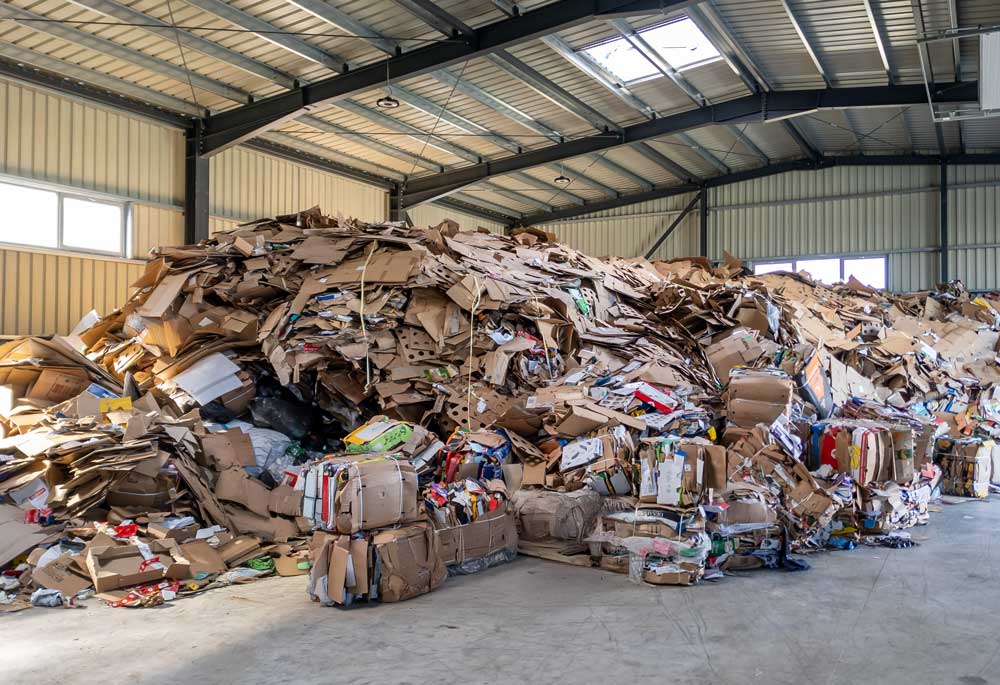
The paper is collected from various sources (population, companies, industry, chain stores, public institutions, etc.) and is of several types (waste paper, packaging, archive). It is sorted and grouped separately, i.e. baled into different types to make it easier to handle and transport, and then converted by paper mills into pulp.
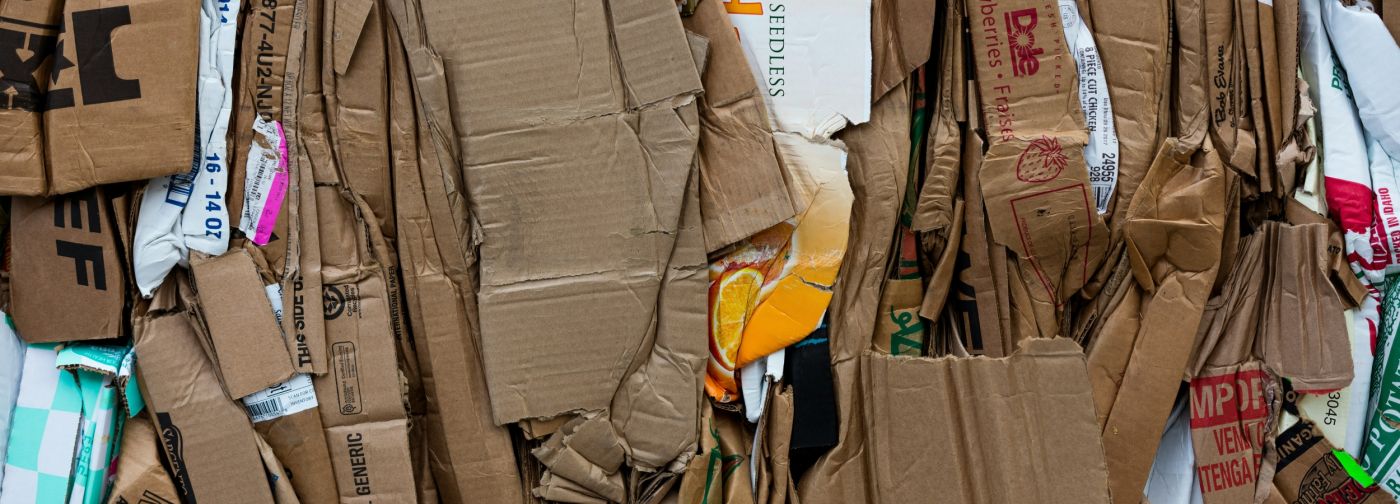
The baling of cardboard waste is carried out using presses placed both in REMATINVEST, as well as to group companies. The resulting bales have a high density and allow easy storage and transportation.
In general, paper and cardboard can be recycled between 6 and 10 cycles, as the fibers become shorter and weaker with each recycling process.
Benefits and Impact
- The corrugated board industry has one of the highest recycling rates of all packaging materials in use today.
- Most corrugated boxes are made from 70% to 100% recycled materials.
- Recycling cardboard helps save trees and reduce landfill waste
What happens to recycled cardboard
Recycled cardboard can be turned into a variety of new products, including toilet paper, paper towels or even eco-friendly building materials.
The recycling process involves sorting, shredding, mixing with water and chemicals to break down the fibers and form new cardboard sheets.
